Ask anybody who has done a few offshore mornings and they'll describe the same strange quiet. Diesel idling, a gull or two overhead, rods twitching in the holders every time the boat rolls. Then a reel lets go with that high tearing sound and suddenly four people are trying to do six jobs. Tuna fishing is mostly that: long boredom, ninety seconds of chaos, then a very long fight. This post wanders through the places people still chase bluefin and yellowfin, what separates the two fish, and the gear choices that decide whether any will be left in twenty years.
Why tuna fishing still draws people offshore
Most of a tuna trip isn't fishing at all. It's coffee from a thermos at 4 a.m., a long run to the grounds, and hours of staring at empty water. Every boat has its own routine for the dead hours. The mate fusses over leaders tied the night before, the captain argues with the VHF, and the younger crew hold their phones up toward land as if that helps, squeezing in a forecast check, the Yankees score or a few hands of blackjack at browinner while there's still one bar left.
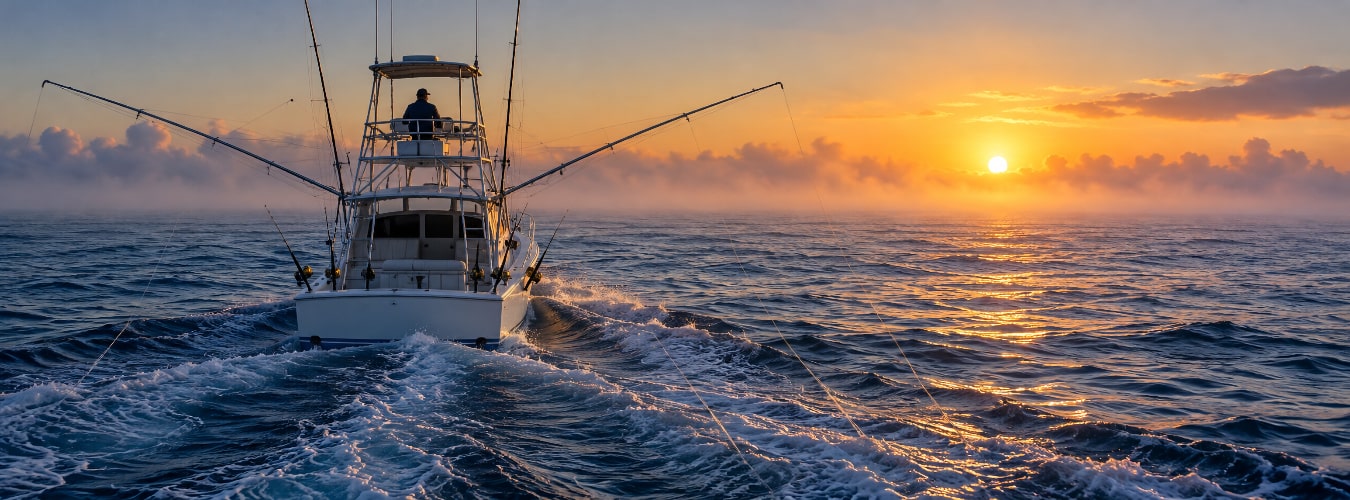
Then a fish eats, and all of that is forgotten. Clipped into a harness against a big tuna, your forearms start burning after ten minutes and the line keeps peeling off anyway, which is a humbling way to learn what a body built for crossing oceans can do. Commercial crews know that strength too, though they count it in tons, not photos. Both sides face the question this blog keeps coming back to: how much can we take before there's nothing left to chase?
Bluefin and yellowfin tuna fishing are two different games
Lumping them together as "tuna" is like calling a draft horse and a racehorse the same animal. Technically true, not much help when you're picking a rod.
The cold-water giant
Atlantic bluefin are the big ones. Adults go past half a ton, and they run warm, a trick very few fish pull off, so they'll follow herring and mackerel into water cold enough to make your hands ache, from the Gulf of Mexico clear up to Norway. Plan on 130-pound class reels, permits sorted in advance, and some days where the only thing you find is fog. Decades of overfishing hammered the species, so almost every bluefin fishery now runs on strict quotas, and in plenty of places sport anglers can only catch and release.
The warm-water sprinter
Yellowfin are a different story. Warm water, quick growth, smaller frames, and a habit of tagging along under spinner dolphins or a drifting pallet. If birds are crashing bait off Cabo, odds are decent there's yellowfin underneath. Newcomers usually start here, since the rods are lighter and the fish a bit more forgiving, and the Gulf, Baja and Hawaii (where nobody says yellowfin, it's ahi) all have boats running trips. Fast growth helps the population bounce back, but it doesn't make yellowfin bulletproof.
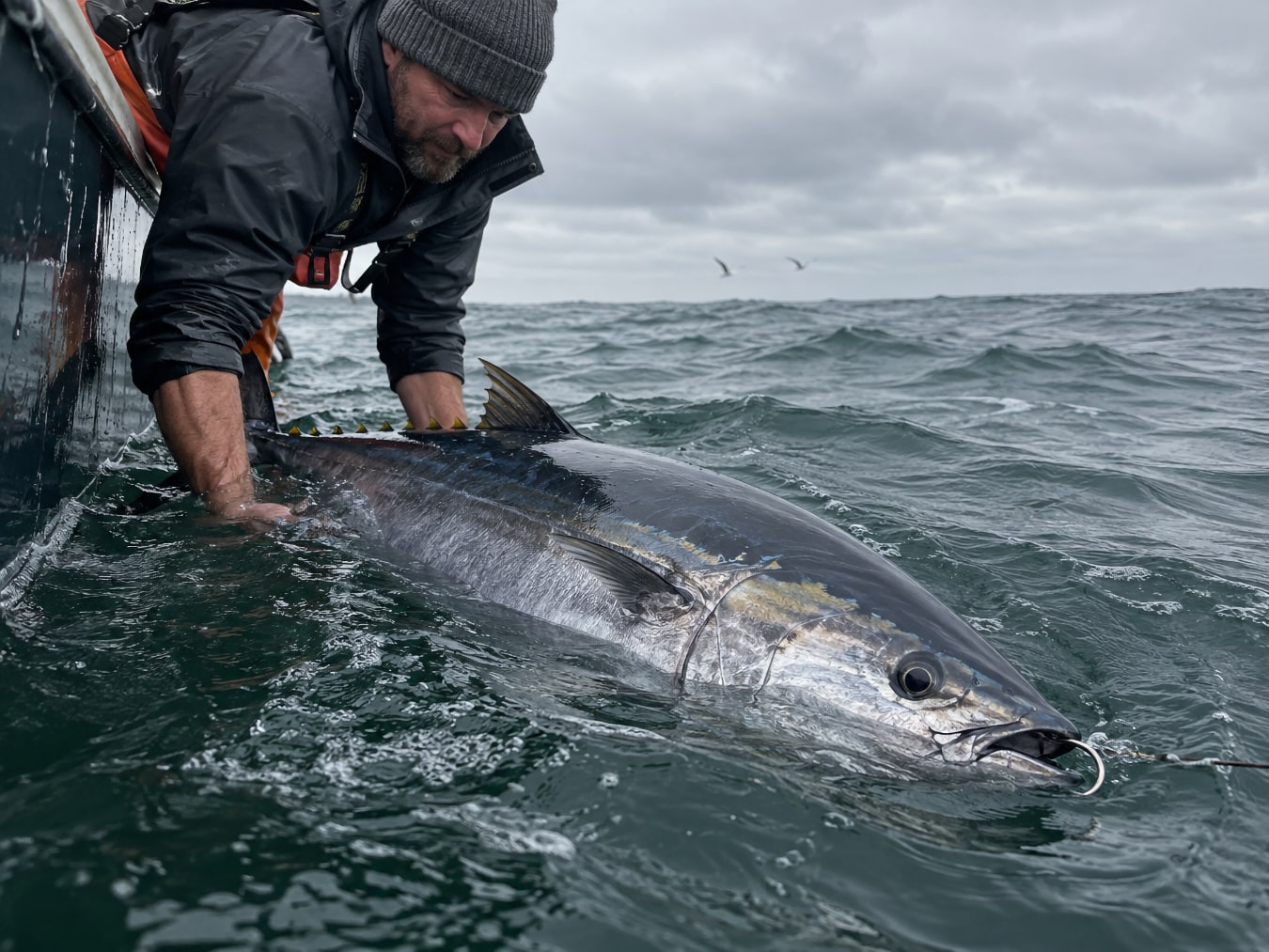
Tuna fishing locations worth putting on the map
Some harbor towns more or less run on tuna. North Lake on Prince Edward Island likes to call itself a tuna capital, and Venice, Louisiana has a whole charter scene built around yellowfin that hang near offshore rigs. A few of the better known tuna fishing locations:
| Location | Main species | Typical season | Why people go |
|---|---|---|---|
| Prince Edward Island and Nova Scotia, Canada | Atlantic bluefin | Late summer into fall | Giants close to shore, mostly released |
| Outer Banks, North Carolina | Atlantic bluefin | Winter | Rough winter trips out of Hatteras |
| Donegal and the west coast of Ireland | Atlantic bluefin | Summer to autumn | Tag-and-release for research |
| Venice, Louisiana (Gulf of Mexico) | Yellowfin | All year | Rigs, chunking, big Gulf fish |
| Baja California, Mexico | Yellowfin | Summer and fall | Week-long boats out of San Diego |
Truth is, the boat matters more than the zip code. One skipper will drag a fish around for two hours to get the photos, another will have it unhooked and swimming in forty minutes. Ask before the deposit leaves your account:
- Does the boat carry every required permit?
- Do you release fish by default, or keep them?
- Circle hooks or J hooks?
- What's a normal fight time for a fish this size?
- Anything you tag, and who gets the data?
- And if it's undersized, or the season's shut?
Sustainable tuna fishing methods and the habits behind them
The tin of chunk light in your pantry has a backstory too, and the gear is most of it. Some methods haul up turtles and baby bigeye along with the target, and some burn absurd amounts of diesel per fish. A rough sorting:
| Method | How it works | Bycatch risk | Scale |
|---|---|---|---|
| Pole-and-line | Fish hooked and swung aboard one at a time | Very low | Small to medium |
| Handline, rod and reel | A single line worked by hand or with a reel | Low | Small |
| Trolling | Lures or bait dragged behind a moving boat | Low | Small to medium |
| Purse seine with FADs | A huge net closed around schools under floating objects | High, juvenile tuna and sharks included | Industrial |
| Pelagic longline | A main line running for miles, hooks every few yards | Turtles, seabirds and sharks get hooked | Industrial |
Notice what the top three rows share? Somebody handles every single fish. It's slow and pricier, and it barely leaves a mark, which is why Maldivian and Azorean pole-and-line boats keep turning up in sustainability reports, and why "pole and line caught" has started showing up on can labels.
The best hook only catches what you went out for. Everything else goes on the ocean's tab.
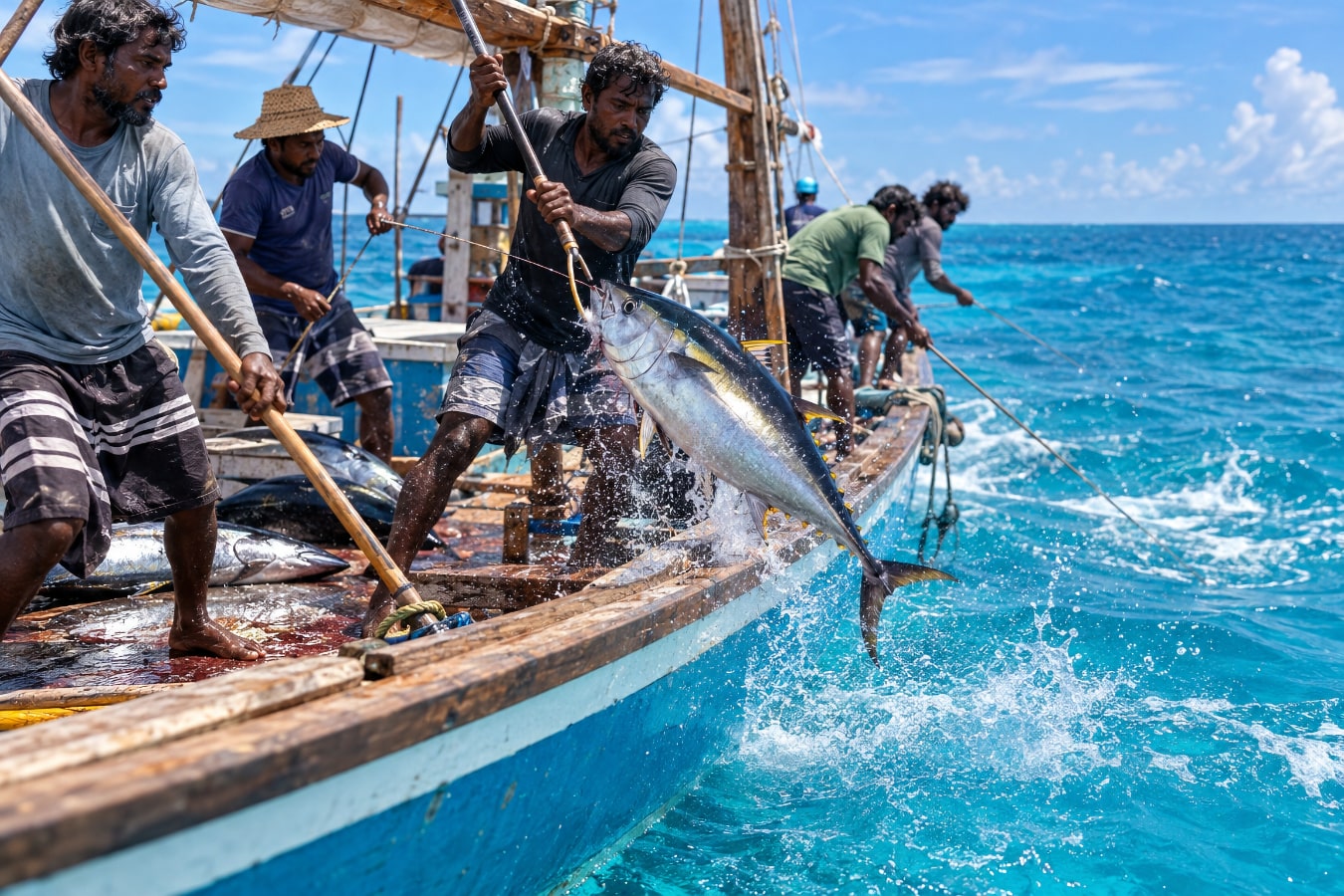
Sustainable tuna fishing practices on deck
Gear is half of it. The other half happens in the last five minutes at the side of the boat, when a tired fish is either looked after or isn't. What good release crews do:
- Circle hooks nearly always, since they catch the corner of the jaw
- Gear heavy enough that the fight doesn't drag on
- The fish stays in the water, no hauling it aboard for a photo
- Boat in gear at idle, fish held alongside so water runs over the gills
- Bag limits, size limits, closed seasons, no exceptions
- Tags and catch reports sent in, so stock assessments aren't guesswork
There's no secret technique on that list. Still, it's the difference between a fish that kicks away and one that sinks slowly with its fins clamped. Good crews brag about a clean release more than about a number on the dock scale.
A tuna that swims off healthy isn't a fish you lost. It's next season, more or less.
Why responsible tuna fishing has a future
For a long stretch we fished the Atlantic as if it had no bottom. That stopped working. The encouraging part is that quotas, tagging and smarter gear have already pulled some bluefin stocks back up, so the fixes aren't just theory. Rod, wheelhouse or grocery aisle, everybody touches this chain somewhere. Back the slow, careful methods and the kid on the next boat still gets to hear that reel scream.